
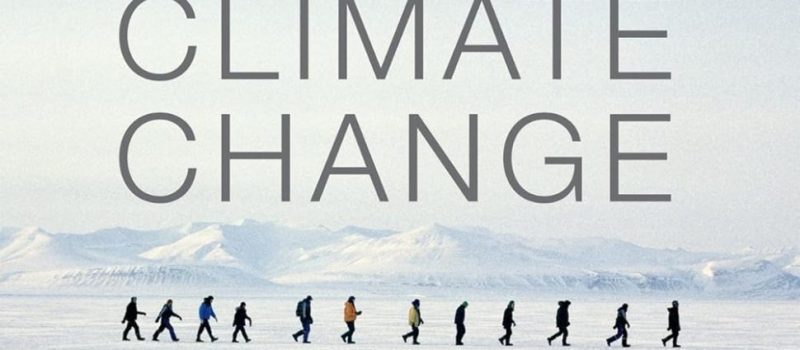
Candis Callison, ‘How Climate Change Comes to Matter: The Communal Life of Facts’ (Durham, NC: Duke University Press. 316pp.)
1 August 2026. This is roughly an 8 minute read.
This essay continues my series of monthly posts in which I select one ‘climate’ book to highlight and review from one of the 44 years of my professional career in climate research (starting with 1984, my first year of academic employment). The series will end in September 2027, the month in which I shall retire. See here for more information about the rational for this series, and the criteria I have used in selecting my highlighted books.
This ‘2014 essay’ can be download as a pdf.
Enacting climate policies in the United States has always proven difficult. In the late 2000s, following the election of President Barrack Obama, some people were hopeful that new possibilities would emerge. For example, in 2009 an energy bill, the proposed American Clean Energy and Security Act, sought to introduce a carbon emissions trading scheme into the US. Although approved by the House of Representatives by the narrow margin of 219 to 212, the bill was never debated by the Senate owing to resistance from Republican senators. A later Congressional report summarised the situation: “Members of Congress continue to be divided in their views on whether climate change risks merit raising current costs to the economy in exchange for benefits that would mostly accrue to future generations, people in other countries, and stability of Earth systems.”
Stymied by Congressional resistance, at the beginning of his second term of office in 2013 President Obama used an executive order to push through a 21-page Climate Action Plan. Announcing the Plan on 25 June 2013, he repeated his pledge that by 2020 the US would reduce its greenhouse gas emissions by 17 percent below 2005 levels. While acknowledging that US carbon dioxide emissions in 2012 were the lowest in two decades, the President indicated that much more needed to be done. The Plan had three key pillars: cut US carbon emissions; prepare for the impacts of climate change; and lead international efforts to mitigate and adapt to climate change. Obama’s speech that day compared the fight against climate change with the Apollo moon programme of the 1960s which brought back images of the “blue planet” that transformed perceptions of the Earth and humanity. What was needed now, said Obama, were
… citizens who will stand up and speak up and compel us to do what this moment demands. Understand, this is not just a job for politicians. So, I’m going to need all of you to educate your classmates, your colleagues, your parents, your friends. Tell them what’s at stake. Speak up at town halls, church groups, [school] meetings. Push back on misinformation. Speak up for the facts.
What did Obama mean by “speaking up for the facts”?
By 2013, the top-level scientific “facts” of climate change were well established. But it was also clear that even among those who accepted these facts, there was no widely shared interpretation of what they meant for caring and acting in the world—not in the United States, and even less around the world. Compared to the 1980s and 1990s, the range of voices and interpretations—and therefore meanings—of climate change had greatly diversified. Depending on viewpoint, climate change could be understood primarily as a technical, economic, political, cultural, moral or existential challenge. What climate change required of American citizens could not simply be read off the pages of the IPCC’s scientific reports. Science could not tell Americans why they should care nor what they should do. There was no single story to tell about climate change; there was no universal imperative to act.
The philosopher Hannah Arendt explained this impasse in her book, ‘The Human Condition’ (University of Chicago Press, 1958). For Arendt, one must pass judgment on the facts before he or she can act politically in the world:
The question is only whether we wish to use our new scientific and technical knowledge in this [or that] direction and this question cannot be determined by scientific means; it is a political question of the first order and therefore can hardly be left to the decision of professional scientists or professional politicians. (Arendt, 1958: 3)
Obama was right in saying that everyone needed to be involved in answering the question of what to do about climate change. But facts did not speak for themselves. They needed interpreting and that interpretation varied from person to person. The meaning of climate change, and the moral and ethical demands it places upon humans, would be understood very differently within and across diverse human cultures. Meaning making precedes action.
This diversity of meanings which emerges from the idea of climate change was explored in Candis Callison’s ‘How Climate Change Comes to Matter: The Communal Life of Facts’ which I have selected as my 2014 Climate Book of the Year. Callison (b.1971) is the Canada Research Chair in Indigenous journalism, media, and public discourse and holds a joint appointment in the School of Public Policy and Global Affairs and the Institute for Critical Indigenous Studies at the University of British Columbia (UBC) in Vancouver. At the time of writing ‘How Climate Change Comes to Matter’ she had recently joined UBC as an assistant professor, having earned both her master’s degree, in media studies (2002), and her PhD, in science, technology and society (2010), at the Massachusetts Institute of Technology.
Before starting postgraduate studies at MIT, Callison had worked for eight years as a television journalist in Canada. It was this experience as a journalist, seeking out the personal stories and meanings behind the headline facts, that guided Callison into the research that culminated in her 2014 book. She understood that debates about climate change were in the end not really arguments about the stability and certainty of scientific facts. Differences of belief, opinion and action about climate change were struggles over different meanings, different conceptions of value, ethics and morality. These were differences that could not be settled merely by reference to “the facts”. Obama’s appeal to his American citizens in 2013 to “speak up for the facts” would not be enough—it could never be enough—when it came to seeking agreement on climate change policies. Facts matter, yes. But they are not the final arbiters of action.
The other motive for Callison’s book was a classroom discussion in which she participated while a master’s student at MIT. “To my surprise”, she wrote, “my classmates angrily blamed the media for not getting the pubic to care about climate change as an issue that required both personal and collective action.” The majority view in the room was of the media not doing their job “of informing and convincing the American people to care about climate change.” [p.3, note 2]
With these insights, Callison crafted her book around investigations into five different social and professional groupings of (mostly) American citizens. These investigations sought to understand—beyond simply grasping climate change facts—what it was that motivated these groups and individuals to take, or argue for, (different) actions on climate change. What motivated them to care? The five groups she studied were: Inuit leaders representing Alaska, Canada and Greenland on the Inuit Circumpolar Council; science journalists, active in both local and national media; American evangelicals within the Creation Care movement; climate scientists who provide advice for decision-makers; and Ceres, a corporate social responsibility group advising stakeholders about climate risk.
Callison used the different efforts of these groups to illuminate the challenge of maintaining fidelity to scientific facts while transforming them into ethical and moral calls to action. A universalist scientific account of the changing climate was refracted into nuanced and pluralistic understandings of climate change. This then manifested in different forms of public and policy advocacy, leading to what Callison meant by “the communal life of facts,” the subtitle to her book. The impersonal scientific facts of climate change—one sort of truth—failed to engage the whole person, however clearly these facts may be communicated. Facts alone failed lamentably to establish another form of truth—an account of what these facts meant in human and social terms. As Arendt had shown, without this latter notion of truth, without establishing the social meaning of facts, there can be no participation in communal life—no inspiration, no direction, no hope.
Establishing ‘truthful meanings’ of climate change was crucial for Callison. Such meanings matter for
…adjudicating debates, deciding what side one wants to be associated with and ‘what’s at stake’ [with climate change], and knowing who and what can be trusted. Not only science, but the social determines ethical and moral value—and the consequent rational to act—helping to resolve [climate] challenges to long-held ideals and norms. [p.244; emphasis added]
The important questions prompted by climate change were therefore always more about ‘matters of concern’ than they were about ‘matters of fact’. Answering them must lean upon more than just science. Answers depended on people’s worldviews and beliefs, their attitudes towards technology, ‘progress’, wealth distribution, human rights and freedoms, and about people’s perceived duties towards the human un-born and the non-human others—whether these others be proximate or distant in either time or space. Responding to ‘matters of concern’ draws much more upon how people imagine themselves in the world than about what they know factually about the world.
‘How Climate Change Comes to Matter’ was reviewed in a variety of disciplinary journals—for example in Anthropos, The Journal of Religion, Social Movement Studies—as well as in broader public media such as Vancouver Weekly and the Electronic Green Journal. These reviews attracted appreciation from a wide range of commentators and scholars. For example, in a blurb for the book Sheila Jasanoff, a prominent voice on the politics of science, praised the ethnographic approach taken by Callison: “To questions such as ‘Why does climate change matter, why do some care about it while others are indifferent, and is scientific knowledge the only way to address these questions?’ Callison shows that ethnography can offer deeply satisfying answers where other methods fail.”
Mark Vardy, reviewing for Social Studies in Science, highlighted a crucial insight Callison’s book revealed about the relationship between facts and action: “Readers learn that many evangelical Christians in the Creation Care movement want the ‘facts’ of climate change to be ‘blessed’”.[1] Vardy went on to explain, this suggests that “the linearity of the Enlightenment model is turned on its head: ‘Action isn’t driven by facts; rather, action is assumed and the work required is to get the [necessary] facts trusted.’” [p. 149] In other words, policy-based evidence frequently trumps evidence-based policy. Not all reviewers were so positive. Martin Skrydstrup, reviewing for BioSocieties, praised Callison for offering “fascinating insights” into how different public groupings engage with climate science.[2] But he remained somewhat sceptical about how she defined these social groups: “Callison remains silent about defining ‘discursive communities,’ which is the key term she deploys throughout the book to hold the five different social groups analytically together and apart.”
I first read ‘How Climate Change Comes to Matter’ five years after publishing my own book ‘Why We Disagree About Climate Change’ (CUP, 2009). In many ways, Callison illustrated empirically, through rich and grounded case studies, the more conceptual argument I had made in ‘Why We Disagree’. Re-reading her book again now, many years later, convinces me it is still essential reading for those wishing to understand the everyday politics of climate change. ‘How Climate Change Comes to Matter’ showed how the facts of climate change become imbued by different social groups with moral and ethical content. By researching different social groups ethnographically, Callison was able to reveal their unique “vernacular”, the specific way climate change was translated within their own domain.[3]
These insights have great public value. Exposing the reasons why climate change does or does not matter to different social groups enables public discussions about climate change to be centred around different values and goals rather than simply around whether this fact is true or that model is accurate. Such value-centred discussions are essential for societies that aspire to allow different voices to be heard, the hallmark of democracy.
© Mike Hulme, August 2026
Subscribe to our newsletter!
Other significant books published in 2014
Joshua P Howe, ‘Behind the Curve: Science and the Politics of Global Warming’ (Seattle/London: University of Washington Press. 296pp.)
One of the foundational graphs in the science of human-caused climate change is the iconic ‘Keeling Curve’ which depicts the changing atmospheric concentration of carbon dioxide as measured at Mauna Loa Observatory in Hawaii. This ‘curve’—the prompt for the title of Joshua Howe’s book ‘Behind the Curve: Science and the Politics of Global Warming’—provided irrefutable evidence of the influence of human activities on the global atmosphere. It is the ultimate ‘scientific fact’. Howe cleverly used this curve as a framing device for his history of the science and politics of climate change in the United States (‘Behind the Curve’ is not a global history) between 1957 and the early 1990s. Howe is professor of history and environmental studies at Reed College, Oregon, where he has worked since 2012.
While studying at Stanford University in the 2000s for his PhD in the history of science, Howe struck up a professional relationship with climatologist Steve Schneider who gave him “unrestricted access to the four decades of climate change history stored in [Schneider’s] memory and filing cabinets.” [p.xiii] The resulting book offered a rich insight into the historical development of climate science in the American political and cultural context of the 1960s, ‘70s and ‘80s. But Howe did more than just reconstruct a history; his aim was to “highlight how scientists, environmentalists and the broader public have interpreted the problem of CO2-induced climate change in different contexts over time.” [p.15] His conclusion was provocative. Howe argued that it was the naïve belief of the scientific community in the “forcing function of knowledge”—their adoption of a ‘science-first’ approach to climate policy—that brought about much of the subsequent political impasse. [p.9]
This argument produced adverse reactions amongst some climate scientists. For example, Gavin Schmidt, a climate modeller at NASA’s GISS, reviewed the book critically: “I was disappointed in the shallowness of Howe’s engagement with his central idea … [his] clichéd descriptions of scientists as political naifs are a constant refrain. [It] comes across not as a critique of science-first approaches to policy that have failed, but rather as criticism of scientists first for failures in policy.”[4] I believe Howe was right in taking aim at the science-first approach to climate change—for reasons I point out at the time[5]. His story revealed the “tragedy” of climate change, tragedy in the literary sense that well-meaning intentions of the key protagonists—in this case American climate scientists and environmentalists—led them to frame climate change in such a way as to close down possibilities for effective policy actions. Howe’s book told a good story, and an instructive one.
Naomi Klein, ‘This Changes Everything: Capitalism vs the Climate’ (New York: Simon & Schuster. 576pp.)
The Canadian author and social activist Naomi Klein was already a prominent figure in 2014, known for her anti-globalisation book No Logo (1999) and her critical analysis of neoliberal economics in The Shock Doctrine (2007). Her support for ecofeminism and organized labour, and criticism of corporate globalization, fascism and capitalism was widely recognised. But it was only in 2009 that she began to take climate change seriously. Social psychology research—which Klein herself quoted—shows that people’s worldviews are rarely changed merely by paying close attention to climate science. Klein’s own encounter with climate science confirmed this: “I realized the science of global warming … could be a catalyst for forms of social and economic justice in which I already believed.” [p.59] In other words, for Klein climate science became a useful lever by which to secure her prior goal—the dismantling of international capitalism.
Political arguments are not won by nuanced scientific claims, nor by clever point-scoring devices. They are won by telling stories which resonate powerfully and persuasively with their audience. ‘This Changes Everything: Capitalism vs the Climate’, published in 2014, certainly offered a powerful narrative. It was a full-blooded offensive against capitalism, the ideology of free market fundamentalism, and the elite money-players who breathe life into it. Whether it was persuasive, and for whom, was less clear.
Klein’s narrative in a nutshell was this. Human influences on the climate must be arrested urgently to keep anthropogenic global warming to below 2°C. If not, then the ensuing changes in climate would become an existential threat to the human species. This reality is denied because we are all compromised, and hence pacified, by the “extreme market fundamentalist ideology” driven forward by the political and corporate elites who run the world. The Green economy, carbon trading, new energy technologies, and proposals for climate engineering are all failing fixes for an increasingly desperate crisis. To carry forward the defeat of free market capitalism—for Klein, a prerequisite for successfully tackling climate change—required the release of new moral vigour and altruistic sacrifice amongst ordinary people. If not, then all hope is extinguished.
When reviewing the book in 2014 for New Scientist, I noted Klein’s remarkable silence about the place of religious conviction and practice in previous social movements.[6] She lamented that the climate movement “has yet to find its full moral voice on the world stage” [p.464], but nowhere in her 466 pages did she mention the role of religion in the lives of the 80 plus per cent of the world’s inhabitants who affiliate to a religious faith. Nor did she anywhere analyse the potential contributions of enlightened religious convictions to the “language of morality” she sought. This is often a blind spot of the political left. Klein’s position differed markedly, for example, from that advanced two years later by Amitav Ghosh in ‘The Great Derangement.’ In his review of ‘This Changes Everything’ for Nature, sociologist Nico Stehr identified another weakness in her analysis. “Klein has explored early manifestations of such resistance among smaller, often ad hoc local social groups around the world”, wrote Stehr. “But her message is still delivered with a strong North American accent.”[7]
As would be expected from an author with as prominent a public profile as Klein’s, ‘This Changes Everything’ made big waves. It was a New York Times bestseller for several weeks in 2014, won Canada’s Hilary Weston Writers’ Trust Prize for Nonfiction, was made into a film in 2015 (see image) and, according to Google Scholar, her book has been cited over 8,000 times, making it one of the most cited climate books published in the twenty-first century. But if one uses Klein’s framing of the problem of climate change as being a battle between climate and capitalism, then there was only ever likely to be one winner. And it wasn’t the climate.
[1] p.774 in: Vardy, M. (2017) Reading for precarious times. Social Studies of Science. 47(5): 772-79.
[2] Skrydstrup, M. (2016) Book Forum: Speaking climate change to power. BioSocieties. 11(3): 401–05.
[3] Channa, S.M. (2016) Review of ‘How Climate Change Comes to Matter’. Anthropological Notebooks. 22(2): 129–30.
[4] Schmidt, G. (2014) On scientists and advocacy. Science. 344 (18 April): 256.
[5] Hulme, M. (2014) Review of ‘Behind the curve: science and the politics of global warming’ by Joshua P Howe. Climatic Change. 126(3-4): 273-78
[6] Hulme, M. (2014) Does this climate narrative really change anything? New Scientist, 24 September
[7] Stehr, N. (2014) A societal sea change. Nature. 513 (18 September): 312.